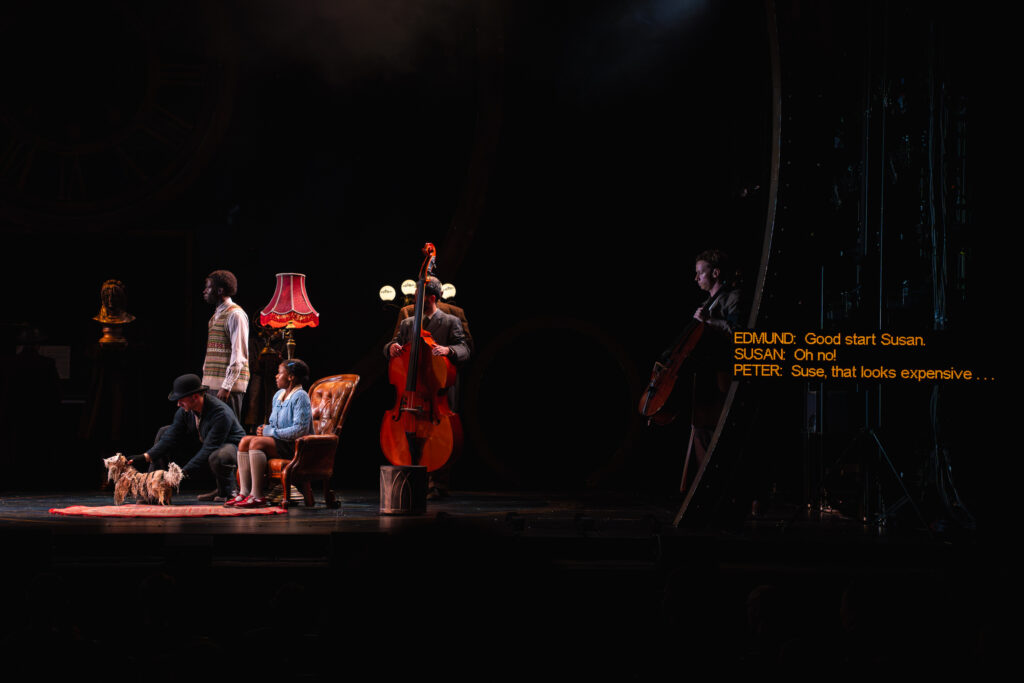
Theatre Accessibility isn’t achieved simply because captions are available. The quality of captions determines the quality of the access they provide. Good quality captions are the missing piece that my ears will never hear, writes Dawn, a Stagetext ambassador.
These days Artificial Intelligence (AI) is everywhere. As businesses work out their AI strategies it’s also in your devices, and used by individuals for all sorts of scenarios and reasons. Perhaps this is why more and more I have seen the assumption from some people that the captioning they see is fully automated or that AI captioning is the answer.
It takes a human to understand the full context of talk, show or story in order to get characters or speakers names consistently correct, to use accurate sound labels and to use correct line breaks that ensure good flow.”
AI can put words on a screen but it is a skilled human captioner that understands the story and its context, and that care and judgement comes through in the high quality of the captions.
It means I can laugh when everyone else laughs, be moved when everyone else is moved, or understand a talk at the same time as the people around me. I am immersed in the experience rather than trying to work out what the AI meant when it outputs inconsistent spelling or an entirely incorrect word.
To fully engage an audience is the goal of any talk or performance, and that’s what great quality human captioning does for me.